

Political Parties Must Take Firm Stance Against Awami League: Chief Adviser’s Press Secretary

- আপডেট : শনিবার, ৮ নভেম্বর, ২০২৫
- ১০৩ বার দেখা হয়েছে
National Desk
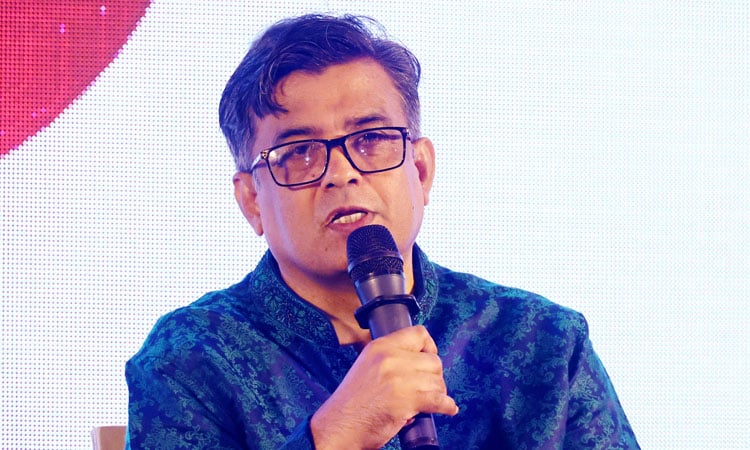
Chief Adviser’s Press Secretary Shafiqul Alam today called upon all political parties to adopt a firm and unified stance against the “fallen fascist Awami League,” describing its recent activities as an existential threat to Bangladesh’s democratic future.
“It’s time for all political parties to take a clear position regarding Sheikh Hasina and the Awami League. The way she continues to speak — branding those who participated in the July Uprising as terrorists — is deeply alarming,” Shafiqul said.
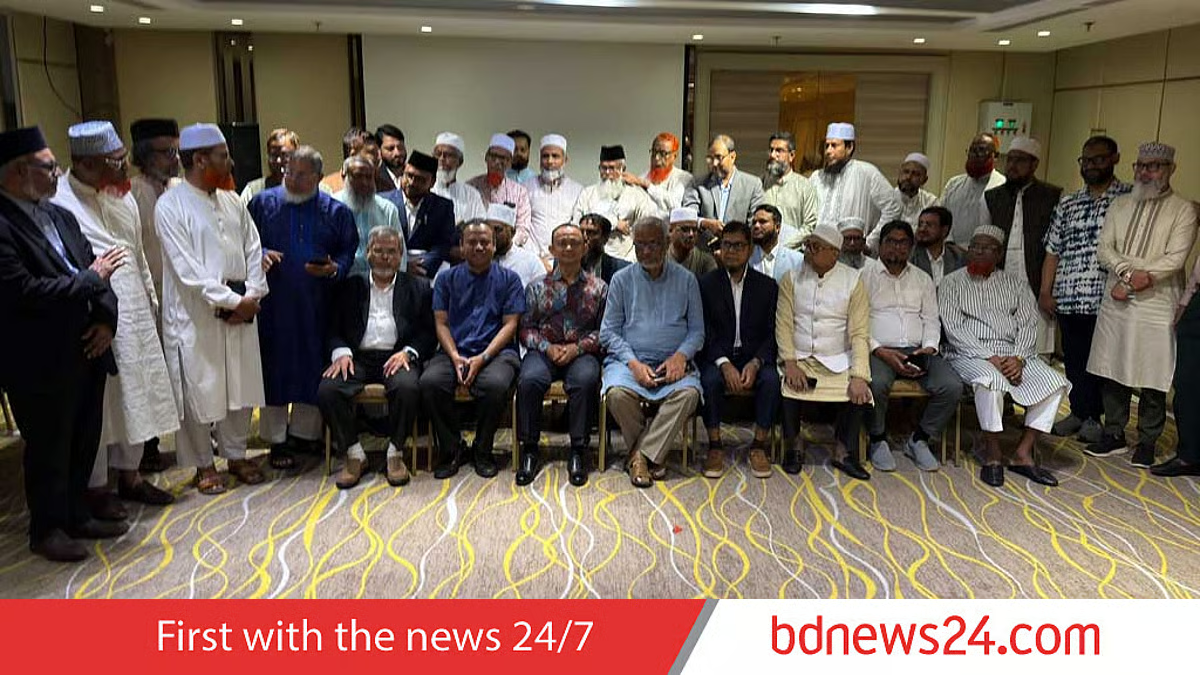
He made the remarks while addressing a policy dialogue titled “How Political Parties Can Use Technology to Reflect Citizens’ Aspirations in Their Election Manifestos,” organized by TRACE Consulting at Hotel InterContinental in Dhaka.
The event was attended by BNP Standing Committee Member Amir Khasru Mahmud Chowdhury, Jamaat-e-Islami Assistant Secretary General A.H.M. Hamidur Rahman Azad, Biplobi Workers Party General Secretary Saiful Haque, TRACE CEO Fuad M Khalid Hossain, Bangladesh Knitwear Manufacturers and Exporters Association (BKMEA) President Mohammad Hatem, and Dhaka University Central Students’ Union (DUCSU) Vice President Sadik Kayem, among others.
Criticizing former Prime Minister Sheikh Hasina’s recent comments to international media, Shafiqul said, “Her rhetoric labeling the people of Bangladesh as terrorists poses a grave threat to our politics. When someone is branded a terrorist, it means they are being marked as expendable. Is she trying to return to power by declaring 180 million citizens as enemies?”
Referring to journalist Enayetullah Khan’s writings, he added, “Enayetullah Khan once wrote that Sheikh Mujibur Rahman made 65 million collaborators; now his daughter is calling 180 million people terrorists. It’s unthinkable.”
The Press Secretary said that the nation is facing an “existential political crisis” and urged all political parties to come together in defense of democracy.
Regarding the upcoming national election, he reaffirmed, “The government is fully committed to holding the election in the first half of February. There should be no uncertainty about that.”
He also said that ongoing discussions over governance reforms and the July Charter represent a healthy democratic process. “Everywhere in the world, constitutional debates take time — sometimes decades. Consensus cannot be imposed overnight,” he noted.
“If political parties cannot reach a conclusion, the Interim Government will take the necessary decisions within its mandate to ensure that the election process remains free from uncertainty,” Shafiqul added.
He observed that Bangladesh currently faces a “fractured political situation” and needs a democratic settlement inclusive of all political spectrums — right, left, or center. “Without democratic trust, there will be no positive international signal, no foreign direct investment, and no job growth,” he warned.
Professor Dr. Shahab Enam Khan of the Department of International Relations at Jahangirnagar University moderated the panel discussion. Diplomats, election experts, civil society members, and representatives from major political parties were also present at the dialogue.






প্রধান সম্পাদক: রাশিদুল হাসান বুলবুল
২৭/১১/২ তোপখানা রোড, সেগুনবাগিচা, ঢাকা - ১০০০
ফোন: ৮৪১৮১৪৪, মোবাইল: ০১৭৫৯৫১৬৭১৬, ০১৭৩৬৬১১৮১১,
E-mail: deshmedia1@gmail.com